Why Lab Grown Diamond Stud Earrings Are The Smart Choice In 2026

When it comes to adding to your collection of timeless pieces of jewelry, natural diamond earrings hold a special place in everyone’s collection, but in recent times lab grown diamond stud earrings are gradually gaining a lot of popularity. Their elegance and versatility make them an irresistible purchase and an essential in everybody’s wardrobe. Be it everyday wear or festive occasions, their simplicity, beauty, and charm make them irreplaceable.
For decades, these earrings have been adorned with mined diamonds. However, in recent times lab grown diamond stud earrings have emerged as an equally dazzling, ecofriendly and cost effective alternative.
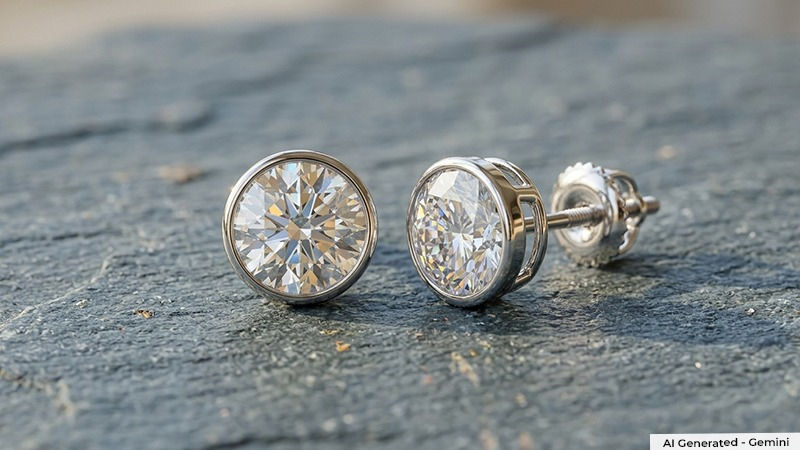
Since their creation lab diamonds have enthralled us with their mesmerising beauty, alluring appeal and brilliance.These diamonds are manufactured in a monitored laboratory setting imitating the manufacturing process of natural diamonds.
Additionally, more and more designs are featuring these lab-created diamonds to create stunning pieces of jewelry. No wonder these lab grown diamond stud earrings are the most sought after choice of people. Are you hesitating, whether to buy lab created diamond stud earrings? Let us learn about the fascinating benefits of lab created diamond jewelry.
Much more affordable
Natural diamonds take one to three billion years to form while lab-created diamonds are manufactured within 6-10 weeks. Due to their rarity, natural diamonds are considerably pricier than similar lab diamonds.
One of the biggest advantages of lab grown diamond stud earrings is affordability. They cost 30-50% less than mined diamonds of similar quality. This means that you can own a bigger diamond of better quality in the same budget.
Environment friendly
Mining natural diamonds requires extensive land excavation which leads to land deforestation, water pollution and habitat destruction of wild animals. On the other hand lab grown diamond stud earrings are free from these drawbacks making them eco-friendly.
Thus, we can say that lab created diamond jewelry is a sustainable choice.
Better quality and more purity
Unlike natural diamonds which have impurities and dirt embedded in them, lab diamonds are usually pure. A good quality lab diamond will be whiter and purer than a similar grade natural diamond.
Not just that, lab grown diamonds are produced in carefully monitored laboratory conditions and have less flaws. They show less evidence of strain in their crystal structure.
Did you know that lab grown diamonds have the same Mohs hardness score as natural diamonds, which is 10?
Wouldn’t it be advisable to purchase lab grown diamond stud earrings? If you are considering buying one, you can visit gemsny.com and go through their wide collection of diamond earrings.

Your first choice in jewelry
Lab-grown diamonds complement your style, it suits any style you are looking for. This is your first choice when it comes to jewelry as they help express your unique style and blend well with your personality.
Like natural diamonds, lab diamonds are also durable, easy to clean and maintain as well.
A pair of lab grown diamond stud earrings is a must have accessory in your wardrobe which will add a finishing touch to your outfit.
Future of the diamond industry
The future of lab grown diamonds is shining bright. As more and more players are coming into the market, the supply of these diamonds are also increasing. With more supply the price of the lab grown diamonds also decreases, thus making them a smart purchase.
Closing lines
Lab-grown diamonds are not only durable and beautiful, but they are also ethical and sustainable. If you are considering buying lab grown diamond stud earrings but are on a fence consider reading GemsNY reviews.
You will find hundreds of positive customer reviews which voice their authenticity. If you want to add a celebrity adorned jewelry to your collection you may go through the GemsNY press. Do not wait to lay your hand on your dream jewelry from their collection.
Comments