Everything You Should Know Before Buying Tanzanites


Tanzanites don't just catch the light, they capture attention. With their hypnotic hues of deep blue and violet, these rare gems strike the perfect balance between modern elegance and mystical charm. Their unique sparkle and color have rapidly made them a favorite in the jewelry world. From their fascinating history and rich symbolism to popular styles and trends, tanzanites have a lot to offer.
This article will guide you through everything you need to know before buying, helping you make a confident and informed decision.
Understanding Tanzanites Allure
Discovered only in 1967 in the foothills of Mount Kilimanjaro, tanzanite is a rare blue-violet variety of the mineral zoisite that quickly earned its place among the world’s most desirable gemstones. What makes tanzanite unique is not only its mesmerizing color but also its exceptional rarity. It's found in just one location on Earth and that makes it a finite, non-renewable resource.
The singular origin of tanzanite is what sets it apart from virtually all other gemstones. Unlike sapphires or rubies, which can be sourced from multiple countries, tanzanite's entire global supply depends on this single stretch of land. Geologists estimate that within the next couple of decades, the mines could be depleted, adding to the gem’s long-term value and mystique.
Remarkable Discovery of Tanzanites
The discovery of Tanzanite stone is relatively recent and quite interesting. In 1967, on the surface of the Merelani Hills near Mount Kilimanjaro, Maasai herders stumbled upon beautiful blue crystals. They realized something special about these stones, gathered them and took them to the prospector Manuel D’Souza. He initially mistook these blue crystals for sapphires and was taken aback by their uniqueness.
He later presented gems to Tiffany & Co, the renowned New York jeweler who immediately realized their potential as a rival to sapphire. Originally called "blue zoisite" after its mineral family, the name was deemed unappealing and market-limiting. To enhance its appeal and highlight its unique origin, the gem was rebranded as "tanzanite," honoring its exclusive source in Tanzania.
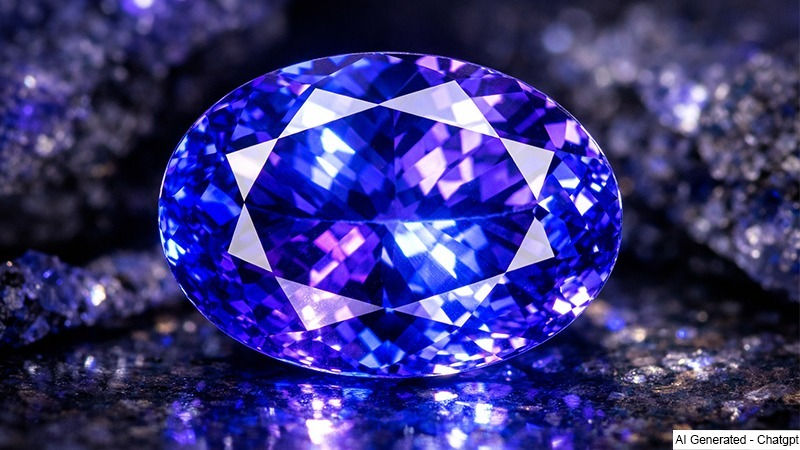
Its striking color, ranging from deep blue to violet with flashes of red, is caused by the presence of vanadium and heat treatment. This treatment deepens its natural tones. One of its most fascinating traits is its trichroic nature, meaning it can display three distinct colors; blue, red-violet and yellow-green—depending on the viewing angle.
Symbolism and Benefits of Tanzanites
Beyond its beauty, tanzanite is believed to promote positivity, focus, and self-confidence. Spiritually, it is linked to the throat and third eye chakras, enhancing communication and intuition. Activating the third eye chakra may also help open financial pathways. It is especially powerful for Sagittarius individuals and is recognized as a December birthstone.
Tips for Buying Tanzanites
1. 4Cs
The quality of tanzanites is based on four characteristics.
Color
The most important factor affecting tanzanite’s value is its color. The gem exhibits a pleochroic nature, showing multiple colors from different angles, often blue, violet, or red flashes. Deeply saturated blue-violet or violet-blue tanzanites are the most desirable and command premium prices. Lighter pastel shades can also be attractive but are less expensive.
If you are also looking for the highest quality gems, find the finest tanzanite gemstones for sale at GemsNY, where elegance meets affordability.
Clarity
Tanzanite stones without visible impurities are considered higher quality and valuable. Clarity grades range from flawless to heavily included. Though, some of the minor inclusions like needles, feathers and crystals do not necessarily diminish its appeal.
For jewelry, opt for eye-clean tanzanite gemstones, where imperfections are invisible to the naked eye. Larger, flawless gems with no visible inclusions command the highest prices.

Cut
The cut quality plays a central role in determining tanzanite’s value, as a well-cut stone enhances brilliance and showcases its best features . Popular cuts include the round brilliant cut, oval, cushion, princess and emerald. These cuts are able to elevate sparkle, making them popular choices for many jewelry styles. Rare cat’s-eye tanzanite is typically shaped into cabochons to highlight its unique optical effect.
Carat
Larger stones are rarer and, thus, more valuable. However, a larger stone with poor color or clarity may not be as valuable as a smaller stone with exceptional color and clarity.
2. Durability
Tanzanites have a Mohs hardness of 6–7, making them ideal for various jewelry types. However, they are sensitive to sudden temperature changes and rough handling, so proper care is key to preserving their beauty and preventing damage.
3. Treatments
Nearly all tanzanites available in the market are heat treated to enhance their blue color, a standard and accepted practice. The treatment reduces the gemstone's natural brown hues and treated stones are generally assumed unless explicitly stated otherwise.

4. Certifications
When purchasing tanzanite, obtaining a certificate of authenticity is essential. It confirms key details such as origin, carat weight, color, clarity and any treatments the gem has undergone. For those wondering where to buy tanzanite, trusted platforms like GemsNY offer high-quality, fully certified gemstones you can rely on.
5. Pairing with Metals
Pairing tanzanite with gold or silver is a great choice. If you prefer metals in warm tones, you can pick tanzanite pieces set in yellow or rose gold. And if you like cool-tone metals, choose silver or white gold. If you want your stone to be surrounded by a soft color, then platinum is just what you need. Its subtle glow beautifully intensifies the tanzanite's vibrant hue.
Buy your personalized tanzanite stone jewelry paired with your preferred metals at www.gemsny.com. For added confidence, be sure to explore GemsNY reviews and see what customers are saying about their experiences
Final Thoughts
Selecting the right tanzanites isn’t just about choosing beautiful stones – it’s about making an informed decision based on gemological facts, market insight and long-term value. From understanding color quality and evaluating cut precision to understanding treatments and verifying treatment authenticity, every detail matters. For more information and the latest insights, follow GemsNY Press.


Comments